Travel and Transport Info for Mae Sai, Thailand by Hobo Maps - - - Home
click to see our Mae Sai - Tachilek Map
Bad news, the border crossing at Mae Sai - Tachilek has been closed to foreigners since July 2023. Thai nationals may cross but with restrictions on how far they may go into Myanmar.
Please credit and share this article with others using this link:https://www.bangkokpost.com/thailand/general/2510784/mae-sai-tachilek-bridge-reopens. View our policies at http://goo.gl/9HgTd and http://goo.gl/ou6Ip. © Bangkok Post PCL. All rights reserved.
Visiting Mae Sai
- Mae Sai is not a large town but it has the feel of a city due to the border activity and related services. The area just to the west of town has stunning scenic mountains looming up with some caves and because of it's remoteness the air is fresh and clean. Very nice panoramic views of the whole area can be seen from the hilltop at Wat Phrathat Doi Wao just west of the bridge.
When you visit Mae Sai or anywhere north of Chiang Rai be sure to carry your passport with you at all times as police and military often make checks.
Mae Sai Transport
- Getting to and from Mae Sai is always by land transport as there is no airport or navigable waterway. Long distance buses go there from most of the northern Thailand cities and from Bangkok. The Mae Sai Bus Station is located on Hwy. 1 about 4.5 km south of the border checkpoint at the Mae Sai River (see it on THIS MAP).
Red songtaew buses run between the bus station south of town to the border at the bridge to Tachilek. They meet most arriving big buses at the south bus station. Flag them down anywhere on the main road by waving your hand in a downward swinging motion when you see them coming.

Blue songtaew buses go to Chiang Saen, Sop Ruak & Golden Triangle area from the junction of Soi 8 and the main street Hwy. 1 about 400 meters south of the bridge & Thai Immigration. They may go several times in the mornings but stop departing by mid afternoon.

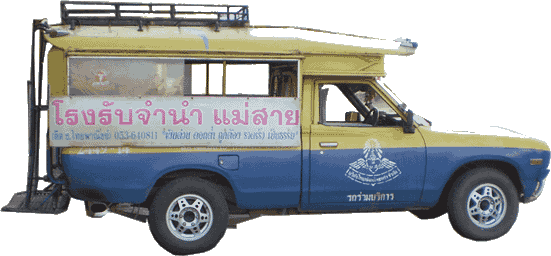
Yellow and blue songtaew buses have a station on the main road about 100 meters south of where Soi 8 meets the main road Hwy. 1 (about 500 meters south of the bridge & Thai Immigration) and go south on Hwy. 1 but we're not sure how far or where their final destination is. They go at least to the police checkpoint on Hwy. 1 at the junction of the side roads west to Tham Pla and Tham Sao Hin caves. They seem to go quite often and you can flag them down anywhere on the route.
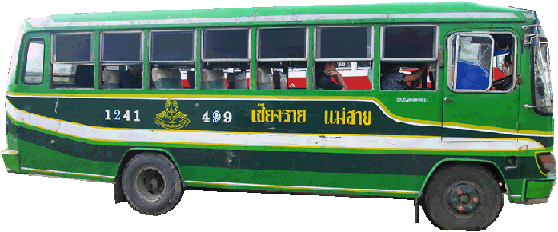
Big old green buses go between Mae Sai and Chiang Rai every hour or so from the big bus station south of town. These buses will stop to drop off or pick up passengers anywhere along the Hwy. 1 route. They stop in Mae Chan and go thru two police checkpoints so carry passport.
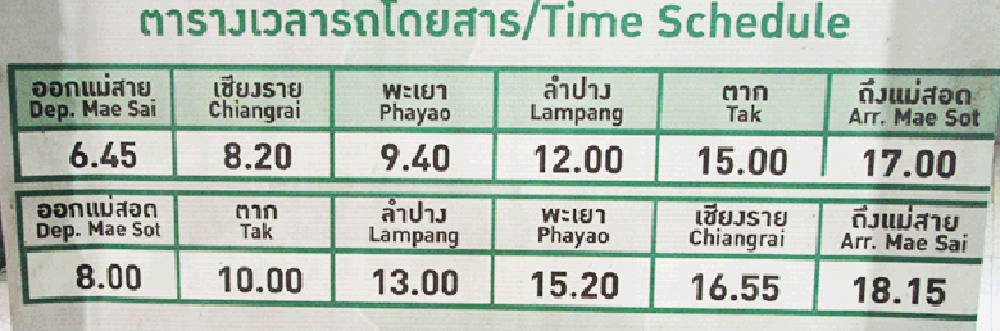
Longer distance bus schedules are shown below and note that much of the bus activity is handled by the Green Bus Co., which provides a fine high quality bus service with a computerized system allowing travellers to make reservations in advance for any of their routes from any of their bus station offices in Northern Thailand. Click HERE to see Green Bus schedules for all of northern Thailand. Green Bus Website schedule - www.greenbusthailand.com/website/en/services/bus/time-table .
About two big Green Buses per day do the trip between C. Mai and Mae Sai. In Feb. 2023 they were going at 06:30 & 12:30. But with the border open again there will surely be more buses soon.
Green Bus Co. has buses between Mae Sai and Mae Sot per schedule below Sept. 2017 - stops in C. Rai, Phayao, Lampang & Tak on the way
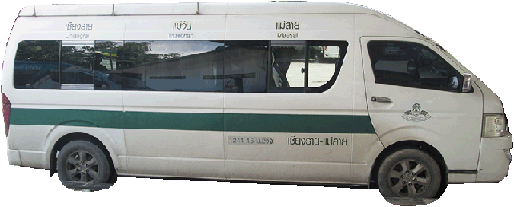
Green Bus vans go from Mae Sai to Mae Chan and Chiang Rai frequently whenever they have a full bus of passengers
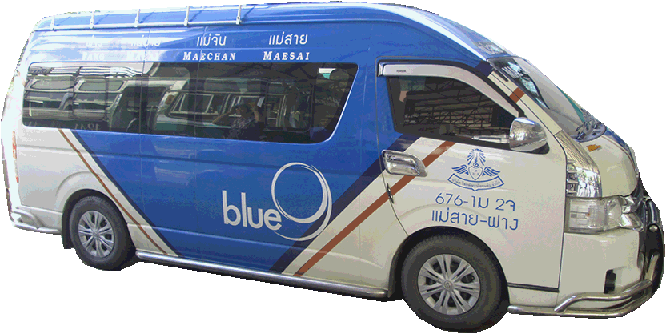
Blue vans also go from Mae Sai to Mae Chan and Chiang Rai whenever full
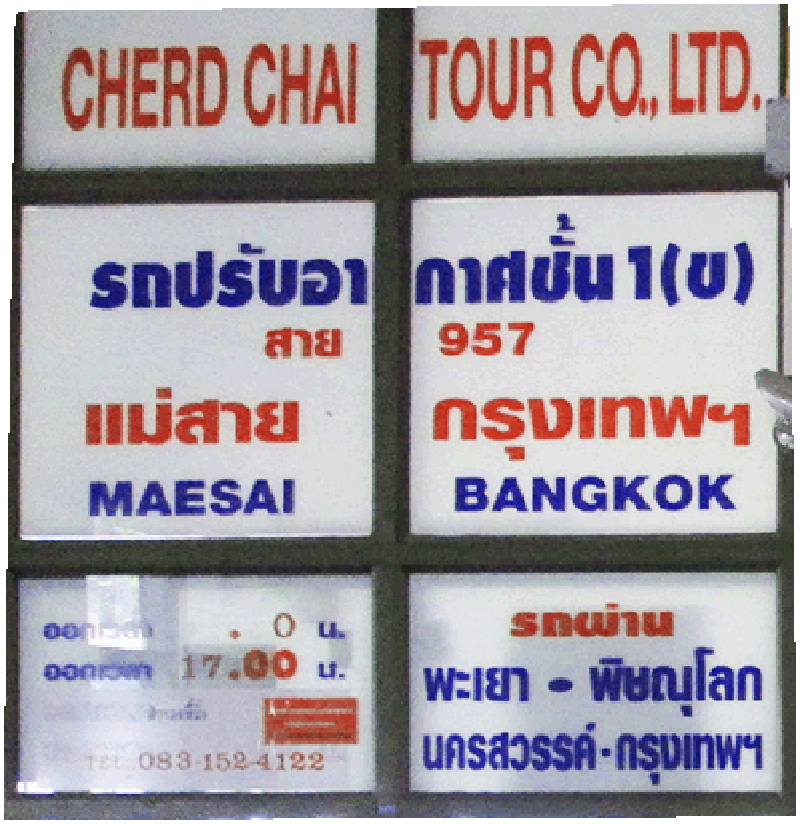
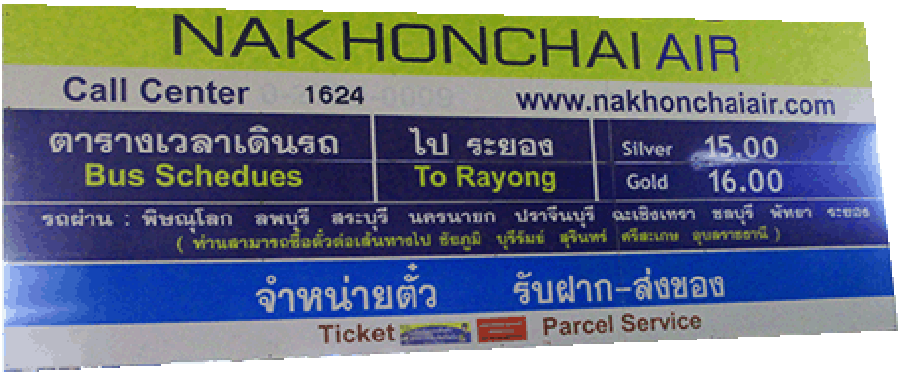
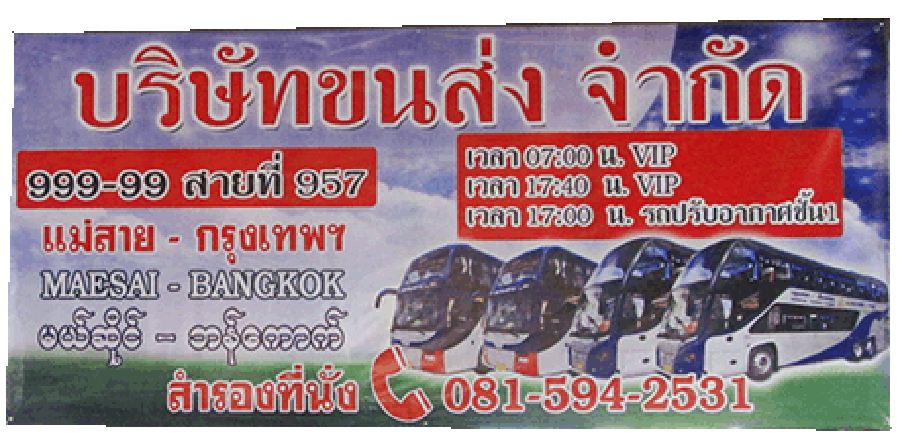
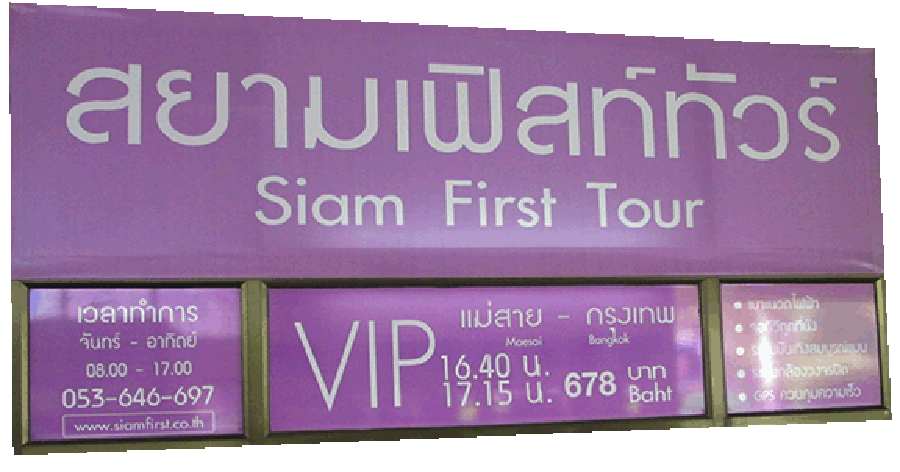
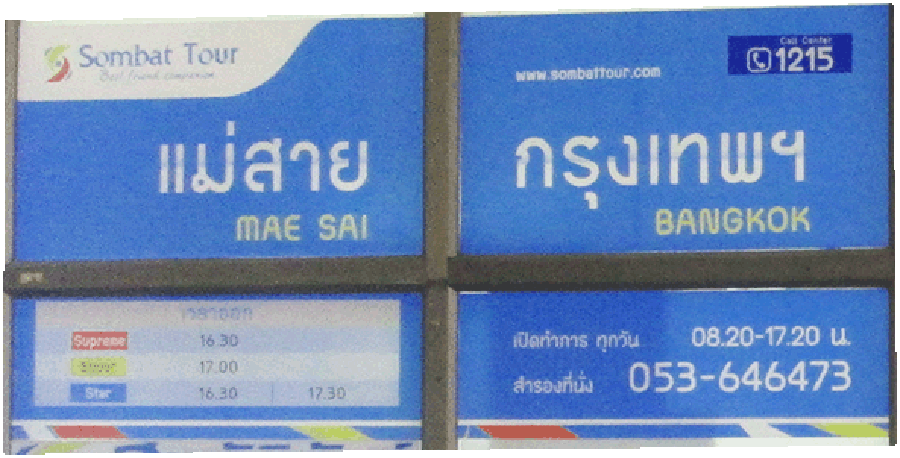
Pictures below taken Sept. 2017 of other bus company ticket windows at Mae Sai bus station - long distance buses mostly to Bangkok & Rayong in evening hours